MCG™
October is too late to learn the outline.
The 1L File is what I would hand you the Sunday before week one. Five filled outlines. One blank template, same order. Both memos. The judicial opinion. Not a course.
$9.99
Limited time

Who I am
I’m Marké. You already know the voice from the videos. I run MCG™. This is the paper, not a speech.
What’s in it
- Torts. The filled outline.
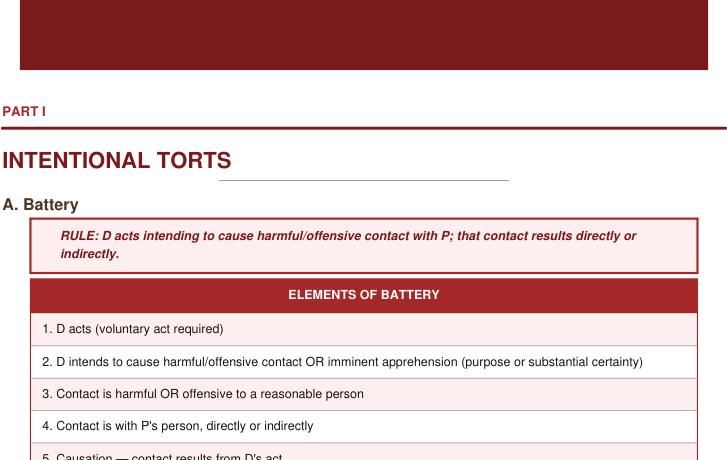

Locked. Rest of the page is in the file. - Contracts. Offer, acceptance, the mistakes.
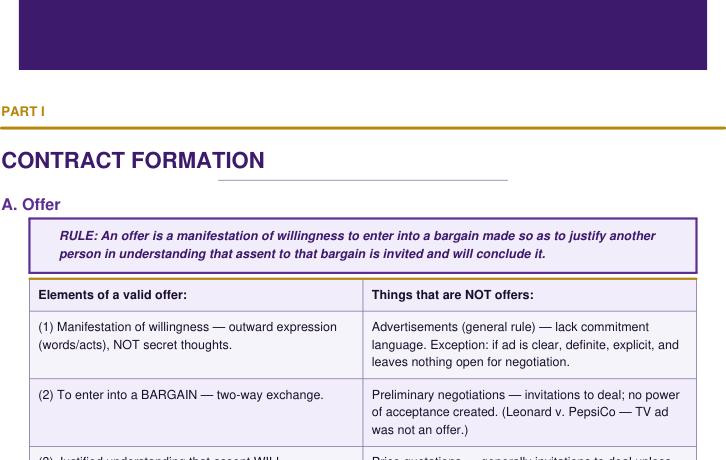

Locked. Rest of the page is in the file. - Property. Possession, not the chase.
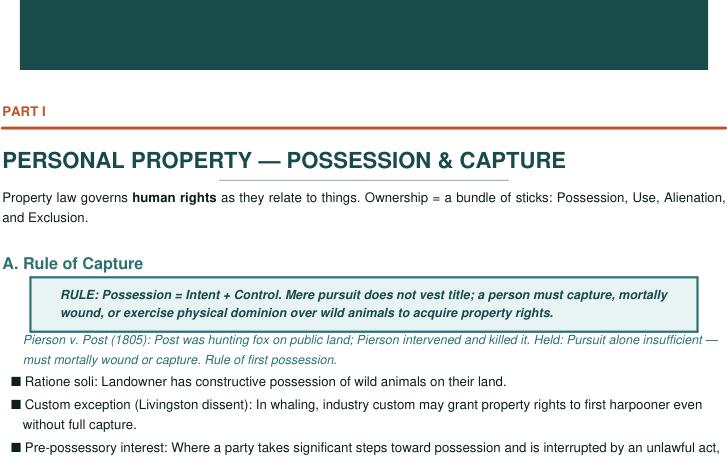
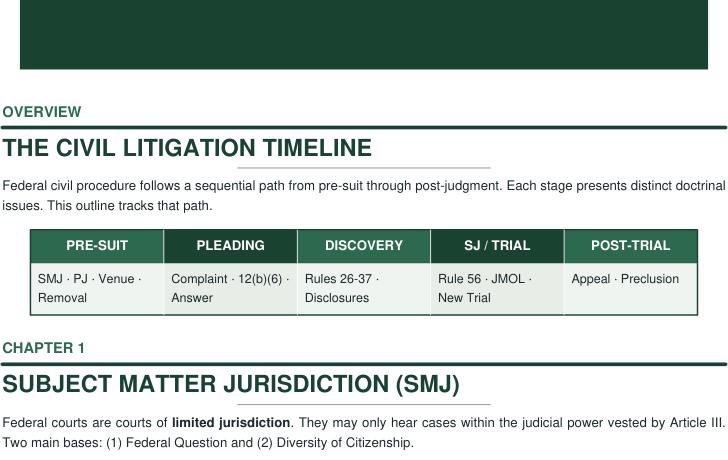
Locked. Rest of the page is in the file. - Civil Procedure. The case, in order.
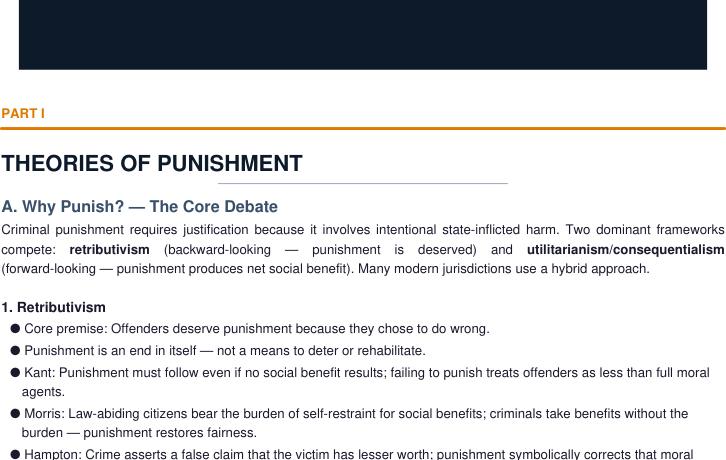
Locked. Rest of the page is in the file. - Criminal Law. Why punish, then the elements.

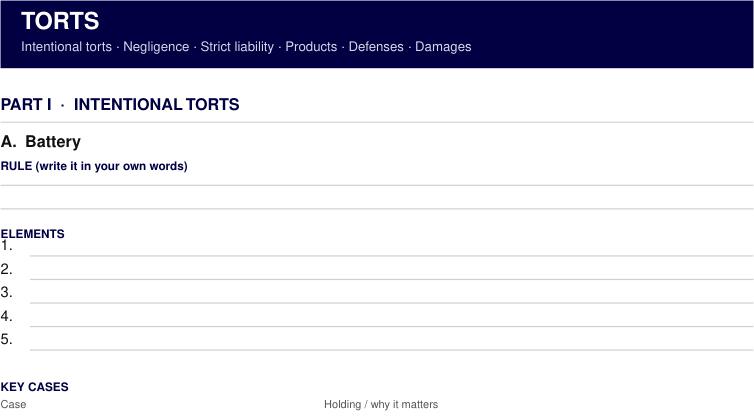
Locked. Rest of the page is in the file. - Blank template. One PDF. All five courses. Boxes empty.

Locked. Rest of the page is in the file. - New York memo. Both drafts. Civil Rights Law § 51.
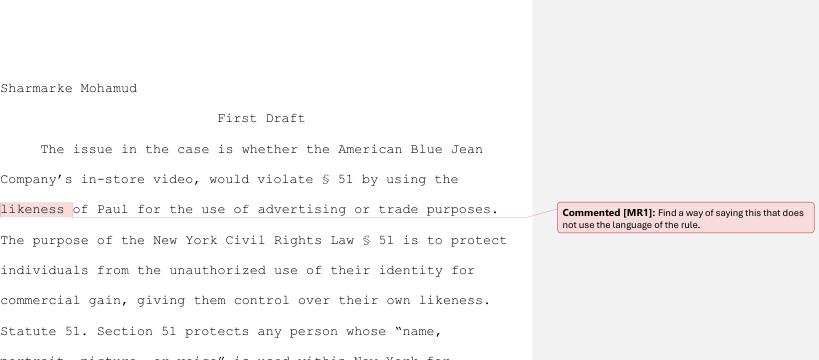

First draft. Locked. 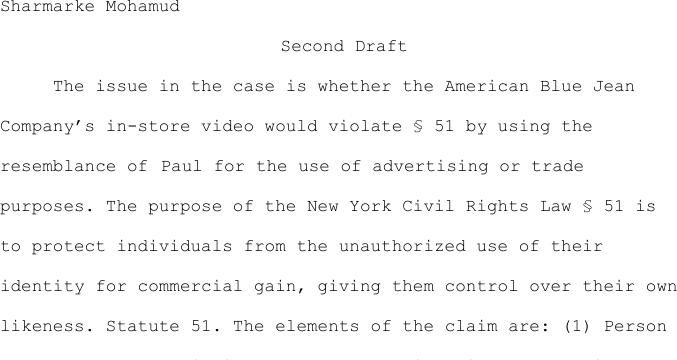

Rewrite. Locked. - Maryland memo. In the file, with the opinion.
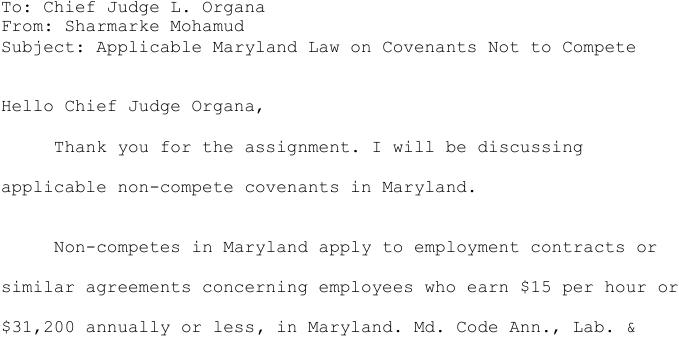

Locked. Rest of the page is in the file. - Judicial opinion. Same problem. Summary judgment.
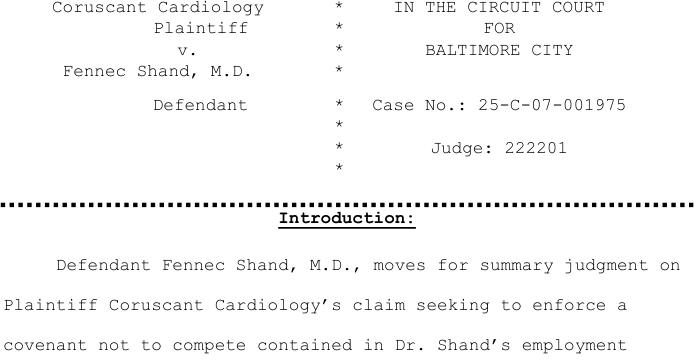

Locked. Rest of the page is in the file.
How to outline
I am not going to tell you to “make an outline” like that sentence means something. It does not. People highlight a casebook for four months and call the highlighter an outline. Then they sit down and the only thing in their head is the color yellow.
Here is the job. Same day as class. Not a Sunday batch if you can help it, and never in October, when you are meeting the doctrine for the second time and pretending it is the first. You open the blank for that course. Torts, Contracts, Property, Civil Procedure, or Criminal Law. The headers are already there. You fill the box the professor just taught. Then you stop.
The top of the page
Course. Professor. Exam date. You write those once. If you do not know the exam date, write “look it up” and look it up tonight. A blank exam date is how people study the wrong week and then act surprised.
The rule box
The line says “RULE (write it in your own words).” That is not a suggestion, and it is not a place to paste the Restatement. If you cannot say the rule to your roommate without looking, you copied it. Close the book. Say it ugly. Write the ugly version. Then clean it into one sentence, two if the rule actually has two moves.
A rule that needs a paragraph is a rule you will not find on a timed exam. Do not write “see casebook.” Do not write “the defendant is liable when” and trail off. Finish it. Who has to prove it. What they have to prove. What happens if they do.
Elements
Number them. The template already numbers them. Use the numbers. If battery has five things, you write five things, each one a line you could check off on a hypo. If you mash them into a paragraph, you will skip one when you are scared. I skip things when I am scared. The numbers are how I stop.
If your professor splits an element the book combines, you split it. Their split is the exam. The book’s split is a suggestion from a person who is not grading you.
Key cases
Two lines. The case. The holding, and why it matters. Not the facts novel. Not the dissent, unless the professor spent the class on the dissent. One line for the holding. One line for why that case is in your outline at all.
Garratt is in the torts outline because a child can intend the contact without intending the harm, if he knows with substantial certainty that the woman is going to hit the floor. That is the point. The chair is just how you remember it. Write the point, then the chair. Not the other way around.
If you missed class, do not invent a case from a commercial outline and drop it in so the box looks finished. Leave it empty and get the note from someone who was there. An empty box is honest. A stranger’s case is how you write a rule your professor does not grade.
The hypo line
Notes, hypo, exam cue. One sentence. The fact pattern your professor likes, not a practice question you found at 1 a.m. If they keep coming back to a shopkeeper, a landlord, a kid, a doctor, that is the sentence. When that fact shows up on the exam, you should already know which box opens.
If you cannot write that sentence, you do not know the class yet. Do not fill the silence with a quote.
Same day
This is the part people skip and then blame on law school. Class ends. You eat. You open the template before you open anything else. You fill only what was taught. Twenty minutes is enough if you were awake. An hour is a lot. Three hours means you are rewriting the casebook, and the casebook is already written.
Miss a day, fix that class the next morning. Do not “catch up on Saturday” as a lifestyle. Saturday is when you say the elements out loud. It is not when you meet the material.
Once a week
Cover the rule with your hand. Say the elements out loud. If you cannot do it without looking, the box is not done. I do not care that the page looks pretty. Pretty and silent fails.
Do this in all five courses, not just the one you like. Property will not get easier because your torts page is beautiful. The template is the same shape on purpose. Battery, offer, capture, subject-matter jurisdiction, mens rea. Each one gets a rule, a numbered list, a case, and a cue. You do not invent a new system in week six because you got bored.
What my filled outlines are for
The filled ones are these same boxes, done. Read them to see how short a rule can be, and which case actually carries the point. Do not paste them into the blank and call that studying. If the words in the box are mine, they are not in your mouth. On the exam, your mouth is the only thing typing.
Use mine when you are stuck on what the box is asking. Use yours when you are learning it. Both are in the file so you can see the blank and the finished page. The blank is empty on purpose.
What this has to do with the memos
The memo is the same muscle with a client’s facts. On the New York draft you can watch the first version talk like the statute instead of using it. The note in the margin says not to do that. The rewrite is the fix. Your outline should already be on the rewrite’s side. Your words. Their rule. Then the facts.
The Maryland memo and the judicial opinion are the same non-compete problem from two seats. You outline the rule before you write either one. If your non-compete box is a paragraph you copied, the memo will be a paragraph you copied. The opinion is what it looks like when the rule has actual elements and a court uses them. Read the memo first. Then the opinion. You will see the difference between repeating a statute and deciding with it.
What not to do
Do not highlight the casebook and call it an outline. Highlighters do not speak.
Do not buy a commercial outline and retype it so it feels like work. Your hand was busy. Your head was not.
Do not outline from a video of a professor you do not have. Their hypo is not your exam cue.
Do not wait for reading period to build “the big outline.” Reading period is for saying the boxes you already have. It is not for meeting battery.
Do not turn my outlines in as your work. They are mine. The blank is there so you build yours. I am not promising you a grade, a rank, or a job. I am telling you the order I use so October does not ambush you.
That is the whole method. Open the box the day you learned it. Rule in your words. Elements as numbers. One case, one point. One sentence for the hypo. Say it on Saturday. If you cannot say it, it is not done.
Not for you if
You want me to write your assignment.
You want a promise about rank, a job, or the curve.
The plan is to drop it in the group chat. One download. Your email.
Before you pay
When does it show up?
After you pay. A download. No classroom login.
What format?
PDFs. Five filled outlines, the blank template for those same five, two drafts of the New York memo, the Maryland memo, the opinion.
Refunds?
Personal use. Final once it is delivered, except where the law requires otherwise. Not legal advice. Not a grade promise. Do not turn these in as your work.
$9.99
Limited time